Basic First Aid Skills Everyone Should Know
The basic first aid skills everyone should know are simple: recognize an emergency and call 911, start hands-only CPR when an adult stops responding and isn't breathing normally, control serious bleeding with firm pressure, help someone who is choking, and cool a burn with running water. Everything else builds on these. The best way to learn them is a short, hands-on class.
This page is the starting point for our First Aid & Health section, which goes deeper on each skill. Nothing here is medical advice or a replacement for training. Think of it as a map of what to learn and why.
The three-step habit: check, call, care
First aid instructors teach a simple sequence that keeps you from rushing in and getting hurt yourself.
- Check the scene. Look for traffic, downed power lines, fire, smoke, rising water or an angry dog. If it isn't safe, stay back and call for help. You can't help anyone if you become a second patient.
- Call 911. Put the phone on speaker so your hands are free. Give your location first, then what happened. Stay on the line; dispatchers can coach you step by step.
- Care for the person. Ask permission if they're awake ("I know first aid. Can I help you?"). Wear gloves if you have them. Do what you were trained to do, and keep them calm and still until help arrives.
When to call 911
Call right away if someone:
- Is not responding, or is breathing strangely or not at all
- Has chest pain or pressure, or trouble breathing
- Shows stroke signs: a drooping face, a weak arm, or slurred or confused speech
- Is bleeding heavily and it won't stop
- Has a seizure, a serious burn, or a head, neck or back injury
- May have swallowed or breathed in something poisonous
- Seems very confused, very hot or very cold
If you're not sure, call anyway. During a large disaster, 911 may be busy or slow. Keep calling, follow any instructions from local emergency officials, and keep providing care while you wait.
The core skills, in plain language
Hands-only CPR and the AED
When an adult suddenly goes down and isn't breathing normally, the most important actions are calling 911 and pushing hard and fast in the center of the chest until help or an AED arrives. Our CPR basics guide explains the American Heart Association's method and the rhythm to aim for, and why it's worth practicing on a manikin.
Controlling serious bleeding
Firm, steady pressure with both hands stops most bleeding. Deeper wounds may need packing, and a limb wound that won't stop may need a tourniquet. The Stop the Bleed guide walks through what the national campaign teaches and how to find a free or low-cost class.
Choking
If an adult can cough forcefully, encourage them to keep coughing. If they can't cough, speak or breathe, call 911 and give the care you've been trained in. Classes teach abdominal thrusts and back blows for adults and children, and a different method for infants. These are skills you need to feel with your hands, so learn them in person.
Burns
Cool a burn under cool running water, cover it loosely, and get emergency care for large, deep or facial burns. Never put ice, butter or ointments on a serious burn. Our burn guide covers the details.
Poisoning
If someone swallowed, splashed or breathed in something harmful and they're awake and alert, call Poison Control at 1-800-222-1222. If they're having trouble breathing, having a seizure or won't wake up, call 911. The poison and toxic exposure guide explains what to have ready when you call, which matters after floods and cleanups when strong chemicals are in use.
Shock, sprains and simple cuts
- Signs of shock include pale or cool skin, a fast pulse, confusion or weakness. Call 911, help the person lie down if that's comfortable, keep them warm and stay with them.
- Sprains and strains: rest the area, support it, and use a cold pack wrapped in cloth. Get it checked if they can't bear weight or it looks deformed.
- Small cuts: wash your hands, rinse the cut with clean water, and cover it with a clean bandage. Watch for redness, swelling or warmth that spreads, which can signal infection.
Allergic reactions
If someone has a known severe allergy and carries their own prescribed epinephrine auto-injector, help them use it according to its instructions and call 911. Never give someone medicine that wasn't prescribed for them.
A household practice plan
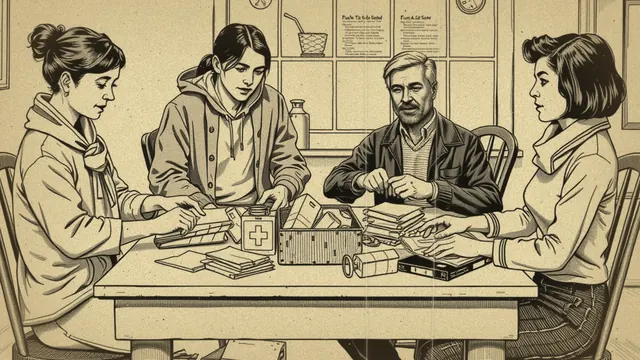
Picture a family of four in a rented duplex: two parents, a twelve-year-old and a grandparent who visits on weekends. Here's how they could spread out the learning over a few months.
| Who | Skill to learn | How |
|---|---|---|
| Parent one | CPR and AED | In-person class through the fire department |
| Parent two | Stop the Bleed | Free community session at the hospital |
| Twelve-year-old | Calling 911, giving the address | Practice at the kitchen table |
| Grandparent | Medication list and allergy card | Fill out with their doctor or pharmacist |
| Everyone | Where the kit and flashlight live | A five-minute walk-through |
Kids can learn more than adults expect. Even young children can memorize their address and practice saying "My grandma won't wake up" to a pretend dispatcher.
Your kit should match your skills
A first aid kit is only as useful as the hands holding it. Stock supplies you've practiced with, and keep the instructions inside. Our first aid kit checklist breaks down what to keep at home, in the car and in a go-bag, and reminds you to check expiration dates.
How to find a good class
Look for hands-on practice with a manikin, a recognized curriculum such as the Red Cross or American Heart Association, and an instructor who leaves time for questions. Fire departments, hospitals, community colleges, libraries and CERT programs often host affordable sessions. If a paid course leans on scary headlines or promises it will make you "ready for anything," our guide to choosing a program can help you compare options with a clear head.
Do this today
- Save your full address in your phone's notes.
- Teach everyone at home how to call 911 and put the phone on speaker.
- Write Poison Control's number inside your first aid kit.
- Find the nearest AED at work or school.
- Sign up for one class this season.
Learning these skills doesn't mean expecting disaster. It means you'll be the calm person in the room when a neighbor needs a hand.
Want a guided preparedness plan?
Some people like the structure of a paid guide. This button opens a third-party survival or preparedness program from one of our advertising partners. Its claims are its own, not ours, so weigh them against our red flags checklist.
See the partner program →We may be paid when you click. The program shown can change. Read its terms before you buy anything. How this works
Frequently asked questions
What are the most important basic first aid skills?
Knowing when and how to call 911, hands-only CPR with an AED, controlling serious bleeding, helping someone who is choking, and cooling a burn. A hands-on class teaches all of these better than reading can.
When should I call 911 instead of handling it myself?
Call 911 for trouble breathing, chest pain, someone who won't wake up or respond normally, serious bleeding, signs of a stroke, a seizure, a serious burn or a possible poisoning. If you're unsure, call; dispatchers would rather hear from you.
How long does a basic first aid class take?
Many community first aid and CPR classes run a few hours, and some are offered in a blended format with online lessons plus an in-person skills session. Check with the Red Cross, the American Heart Association, your fire department or a local hospital.