Emergency Kit for Kids: Comfort, ID and a Plan They Understand
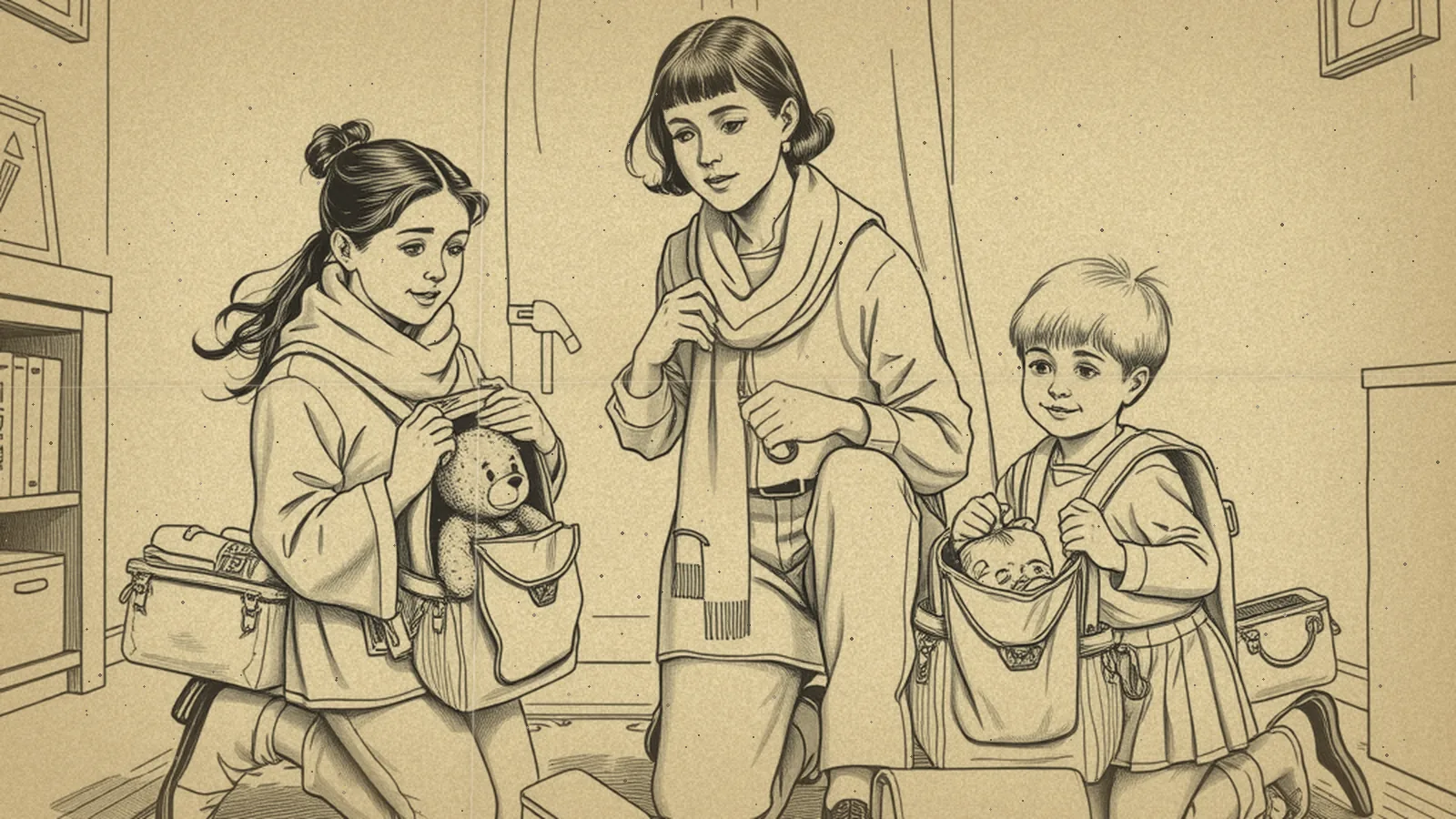
An emergency kit for kids is a small bag with the things that keep a child fed, warm, identified and calm: a change of clothes, snacks and water, any medicines, a comfort item, an activity, and a card with family contacts. Build it with your children rather than for them. When kids help pack, the bag stops being scary and becomes something they're proud of.
The household basics (water, food, light, radio, first aid) belong in your main kit, which is covered in our Emergency Kits section and on the full 72-hour kit checklist. This page covers the extras that children need on top of that list.
Why kids need their own bag
Adults can get through a long day in a shelter or a relative's living room with a phone and a snack. Children often can't. Hunger, boredom, a wet diaper or a missing stuffed animal can turn a hard evening into a very hard one. A child-sized bag solves small problems before they grow.
It also gives kids a job. A seven-year-old who knows "my bag is by the door, and I carry it" feels useful during an evacuation, and that sense of having a role helps children cope.
The core kid kit checklist
Start with this list for each child, then adjust by age.
- Clothes: one full change, including socks and underwear, plus a warm layer and rain gear suited to your climate
- Food: familiar, ready-to-eat snacks your child already likes, such as crackers, granola bars, dried fruit or squeeze pouches
- Water: a refillable bottle they can carry, plus their share of the household water supply
- Medicine and health items: any daily medications, inhalers or allergy treatments your child's doctor prescribes, with a written list
- Comfort item: a small blanket, stuffed animal or family photo
- Activity: a deck of cards, a coloring book and crayons, a paperback, or a small puzzle
- Hygiene: travel toothbrush, wipes, hand sanitizer and a small towel
- Light: a small flashlight or headlamp they are allowed to use (kids love this part)
- Whistle: clipped to the bag, with a lesson on when to use it
- ID and contact card: see below
On water, plan at least one gallon per person per day, and know that children may need more, especially in hot weather. Our guide to how much water to store walks through the household math.
Packing by age
| Age | Add these | Notes |
|---|---|---|
| Babies | Diapers, wipes, diaper cream, formula or nursing supplies, bottles, a sling or carrier | Ask your pediatrician what to keep on hand for formula and feeding if water or power is out |
| Toddlers | Sippy cup, extra snacks, a favorite small toy, pull-ups, a familiar bedtime item | Pack more spare clothes than you think you need |
| School age | Their own small backpack, a book, a notebook and pencils, a family photo | Let them choose some of the snacks and the activity |
| Teens | Phone charger or small backup battery, earbuds, a paperback, personal hygiene items | Give them real responsibility, such as checking the flashlight batteries |
For children with disabilities or medical needs, add the items that keep their routine steady: sensory tools, noise-reducing headphones, a communication board, feeding supplies or spare parts for equipment. Write down how to use any device so a helper could step in.
The ID and contact card
A simple card is one of the most valuable things in a child's bag. Put one in the kit and a copy in their school backpack. Include:
- The child's full name and a recent photo
- Parent or guardian names and phone numbers
- An out-of-area contact who is likely to be easier to reach than local family
- Allergies, medical conditions and medications
- A note such as "I may need help communicating" if that applies
Young children should also practice saying a parent's full name and phone number. Turn it into a song or a car game. Seal the card in a small zip-top bag so it stays dry.
Keep the master copies of birth certificates, custody papers and medical records in your important documents binder, which is where the whole family's paperwork lives. The child's bag only needs the contact card.
School and child care plans
Many emergencies happen on a weekday, when children are somewhere else. Take these steps this month:
- Ask your child's school or child care center for its emergency plan, including where children go if the building is evacuated.
- Find out who is allowed to pick up your child, and add a backup adult to the approved list.
- Make sure the school has current phone numbers and your out-of-area contact.
- Ask whether the school keeps a supply of your child's needed medicines and what paperwork that requires.
- Tell your child, in simple words, that if something happens at school, a grown-up they know will come get them.
These steps fit into your larger family emergency plan, which covers meeting places, roles and how everyone reconnects. Kids do better when the plan is practiced, not just written down.
Pack it together: a Saturday project
Here's a worked example for a household with two kids, ages 4 and 10, and a dog.
- Gather (20 minutes): Each child picks a backpack. The 10-year-old reads the checklist out loud while the 4-year-old finds a stuffed animal and a favorite snack.
- Pack (30 minutes): Clothes go in first, rolled into a gallon bag to stay dry. Snacks, water bottle, flashlight and activity go on top. A parent adds medicines and the contact card.
- Label: Write each child's name inside the bag.
- Practice (10 minutes): Run a "grab your bag" drill. The 10-year-old carries their bag and helps the dog's leash. The 4-year-old carries a small bag with just their comfort item and snack.
- Set a reminder: Put a date on the calendar to swap clothes and snacks as kids grow.
That dog gets its own supplies too. Our pet emergency kit guide covers food, water, records and carriers, and kids often enjoy being in charge of packing for the family pet.
Talking about it without fear
Children take their cues from adults. If you're calm, they usually will be too. A few tips:
- Use plain, honest language: "Sometimes storms knock the power out, so we keep a bag ready."
- Focus on what the family will do, not on what might go wrong.
- Keep news and frightening videos away from young kids.
- Answer questions briefly, then move back to the activity.
After a real emergency, it's normal for kids to be clingy, have trouble sleeping or ask the same questions again and again. Routines help. If worries last or get worse, talk with your pediatrician or a licensed therapist; our guide to coping after a disaster has more. If you're in crisis in the US, call or text 988 (Suicide & Crisis Lifeline).
Don't forget the grown-ups in your child's life
Kids often split time between homes or spend weekends with grandparents. Share a copy of the contact card and the kit list with every household your child stays with. If a grandparent is part of your plan, our guide to an emergency kit for older adults can help them build a kit that fits their own needs, so the whole family is ready together.
Keep it current
Kids grow fast. Twice a year, swap clothes for the right size, replace snacks your child no longer likes, update the photo and contact card, and refresh any medicines. Ten minutes with each child keeps the bag useful and reminds everyone of the plan. Always follow instructions from local emergency officials, and if they say to evacuate, grab the bags and go.
Want a guided preparedness plan?
Some people like the structure of a paid guide. This button opens a third-party survival or preparedness program from one of our advertising partners. Its claims are its own, not ours, so weigh them against our red flags checklist.
See the partner program →We may be paid when you click. The program shown can change. Read its terms before you buy anything. How this works
Frequently asked questions
What should go in a child's emergency kit?
Pack a change of clothes, favorite snacks, a water bottle, a small comfort item, a simple activity, any needed medicines or supplies, and an ID card with family contacts. Add diapers, wipes and formula for babies and toddlers.
Should my child carry an emergency contact card?
Yes. A card in a backpack or wallet with a parent's phone number, an out-of-area contact and any allergies or medical needs helps school staff or responders reach you quickly if you're separated.
How do I talk to kids about emergencies without scaring them?
Keep it short, calm and practical. Explain that the kit is like packing for a sleepover that you hope never happens, let them pick a few items, and practice your plan together like a game.