How to Make a Family Emergency Plan Your Whole Household Knows

A family emergency plan is a short, written agreement about what everyone in your home will do in a disaster: how you'll get warnings, where you'll meet, who you'll contact and how you'll leave if told to. Ready.gov recommends three steps for every household: make a plan, build a kit and stay informed. The plan is the part that costs nothing, and you can draft it tonight.
The plan is the foundation of everything else in our Disaster Planning section, because every hazard guide assumes your household already knows its meeting spots and contacts. Below you'll find the steps, a fill-in worksheet and ideas for making it stick.
Step 1: Hold a short household meeting
Gather everyone who lives with you, plus anyone who regularly helps, like a grandparent who does school pickup. Keep it to about half an hour. Kids can join in; they remember plans better when they help make them.
Talk through four questions:
- What emergencies are most likely where we live?
- How will we get warnings?
- If we're apart, how will we find each other?
- If officials tell us to leave, where do we go and how do we get there?
Step 2: Choose your meeting places
Pick three places, each for a different situation.
| Meeting place | When you'd use it | Example |
|---|---|---|
| Right outside home | A house fire or gas smell | The big oak tree across the street |
| In the neighborhood | You can't get home, or home isn't safe | The library parking lot two blocks away |
| Out of town | An evacuation order covers your area | A cousin's home in the next county |
Choose spots everyone can describe and find, including kids and older relatives. If someone uses a wheelchair or walker, make sure the route is accessible.
Step 3: Set up how you'll stay in touch
Local phone lines often jam during disasters, while a call or text to someone farther away may get through. Choose one out-of-area contact everyone checks in with. Write numbers on paper too, because many of us no longer know a single phone number by heart.
Our emergency communication plan guide goes deeper on wallet cards, group texts and phone alerts, and it's the natural next step once your meeting places are set.
Step 4: Give everyone a role
Roles cut down on confusion. Match jobs to ages and abilities.
- Adult A: grabs the go-bag and the documents binder.
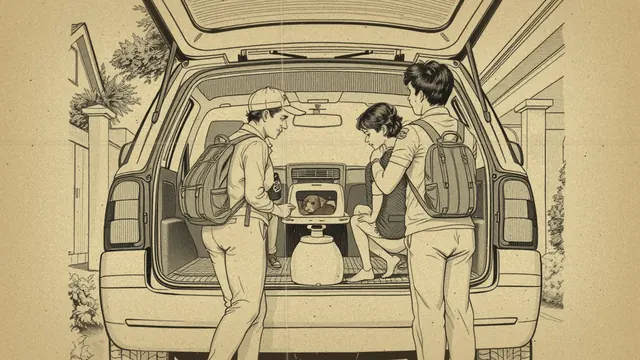
- Adult B: gets kids and pets into the car or to the meeting spot.
- Teen: checks on the older neighbor next door and texts the out-of-area contact.
- Younger child: carries their own small backpack and holds the flashlight.
- Everyone: knows where the utility shutoffs are, even if only adults use them.
A single parent with a toddler might keep it simpler: one bag, one carrier, one call. That's still a plan.
Step 5: Plan your way out
Know at least two routes out of your neighborhood and where you'd go. Many people choose a friend or relative's home outside the area; others look up public shelters and pet-friendly hotels in advance. The evacuation plan guide covers zones, fuel, routes and what to load first. Whatever you plan, follow evacuation orders and instructions from local emergency officials. They know about closed roads and open shelters that you won't.
Step 6: Plan for the people who need extra help
Every household is different. Build these into your plan now, not during an emergency.
- Children: Know your school's or child care center's emergency pickup rules. Make sure the school has current contacts. Give kids a card with your out-of-area contact's number.
- Older relatives: Ask what they'd need to leave quickly, such as hearing aids, glasses, a cane or a medication list.
- People with disabilities: Plan for mobility equipment, backup power for medical devices and a support person who knows the plan.
- Pets: Add carriers, leashes, food and vaccination records, and list pet-friendly places to stay.
- Renters: Learn your building's exits and its emergency procedures, and keep your renter's insurance information handy.
For children, a kit of their own makes the plan feel real. Our emergency kit for kids guide covers comfort items, ID cards and how to coordinate with school plans.
A one-page plan worksheet
Copy this onto a sheet of paper or into a note on each phone.
- Household members and their cell numbers
- Out-of-area contact name and number
- Meeting place outside home
- Meeting place in the neighborhood
- Out-of-town destination and address
- Two evacuation routes
- School, child care and workplace emergency numbers
- Doctors, pharmacy and a medication list
- Pet names, vet number and pet-friendly lodging
- Insurance company and policy numbers
- Local emergency management and utility numbers
- Where the water, gas and electric shutoffs are
Store copies in your go-bags, in each car, on the fridge and in a photo on each phone.
Step 7: Practice
A plan you've never practiced is a guess. Practice doesn't need to be dramatic.
- Walk to your neighborhood meeting spot together.
- Send a test text to your out-of-area contact and see who answers.
- Time how long it takes to load the car with bags and pets.
- Ask kids to explain the plan back to you in their own words.
Pick two dates a year for a refresh, such as the start of the school year and the start of spring. Update phone numbers, swap out outgrown kids' clothes and check that copies are still where they belong.
What a plan can and can't do
A plan won't stop a storm or guarantee everyone stays safe. What it does is cut down on the decisions you need to make under stress, so you can act faster and help each other. If you're tempted by an expensive course promising a perfect survival system, our guide to choosing a program explains how to tell useful training from fear-based marketing. Most of what matters is free and lives in this plan.
After the emergency
Your plan should also cover what happens next: checking in with your contact, reuniting, checking your home for damage and starting recovery. The after a disaster guide walks through safety checks, documenting damage and applying for assistance, so it's worth reading alongside this one.
Your to-do list for today
- Schedule a 30-minute household meeting this week.
- Pick your three meeting places.
- Choose an out-of-area contact and ask them if they're willing.
- Fill out the one-page worksheet above.
- Put copies in phones, bags and cars.
- Put two practice dates on the calendar.
That's a real family emergency plan. You can make it better over time, but once these steps are done, your household is far more ready than it was this morning.
Want a guided preparedness plan?
Some people like the structure of a paid guide. This button opens a third-party survival or preparedness program from one of our advertising partners. Its claims are its own, not ours, so weigh them against our red flags checklist.
See the partner program →We may be paid when you click. The program shown can change. Read its terms before you buy anything. How this works
Frequently asked questions
What should a family emergency plan include?
At minimum: how you'll get alerts, a meeting place near home and one farther away, an out-of-area contact, your evacuation routes and destination, and who handles kids, pets and older relatives. Write it down and keep copies in bags, cars and phones.
How often should we practice our family emergency plan?
Practice at least once or twice a year, and any time your household changes, such as a new home, school, job or family member. A short walk-through of the meeting spot and a test text to your out-of-area contact are enough to keep it fresh.
Do we need a written plan if we've talked it through?
Yes. In a stressful moment people forget details, and phones can die. A one-page written plan lets a babysitter, grandparent or older child follow the same steps you would.