Knots Everyone Should Know (and What Each One Is For)
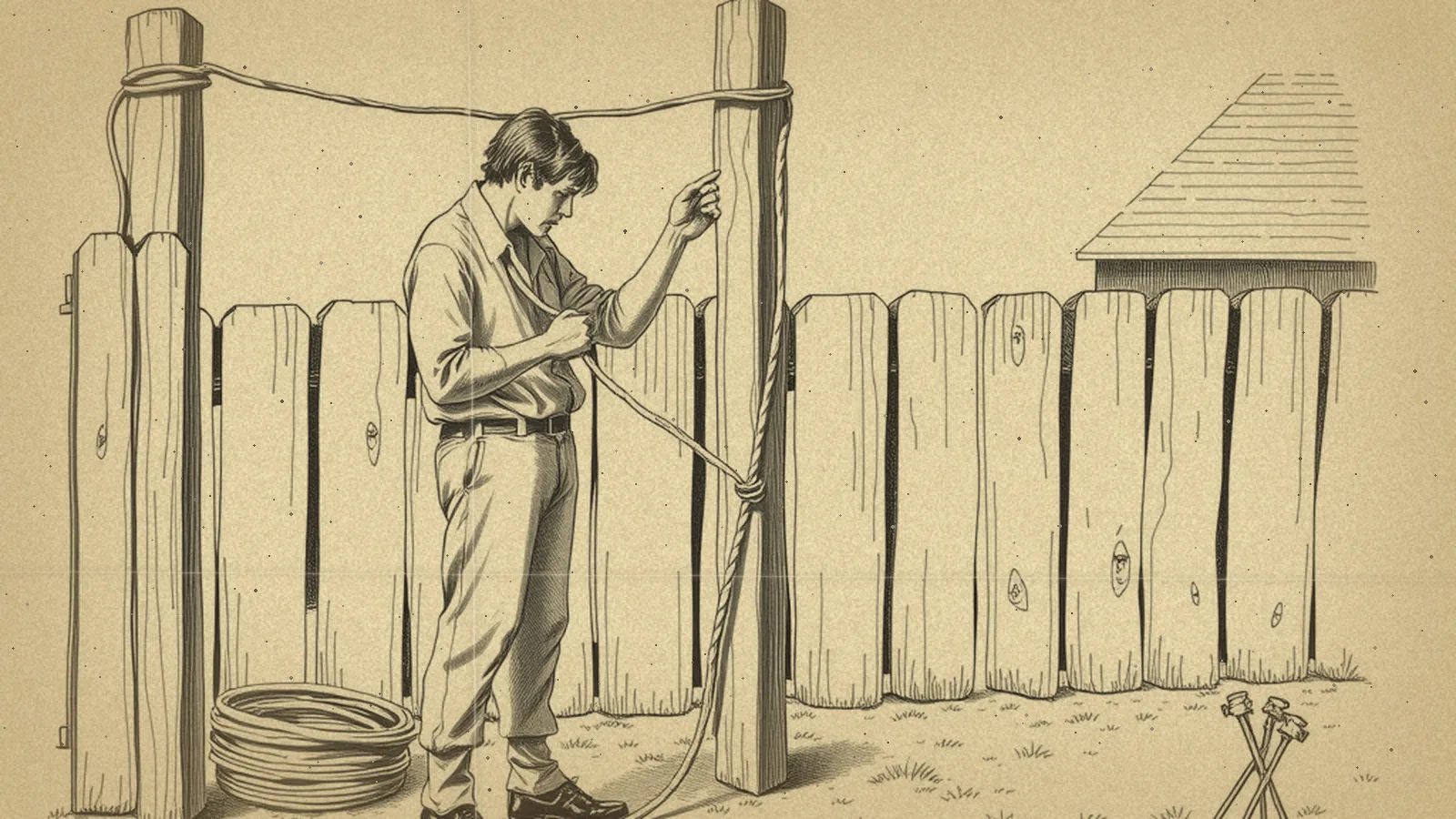
The knots everyone should know are the bowline, the clove hitch, the taut-line hitch and the square knot. With just these four, you can make a loop that won't slip, tie a line to a pole, put up a tarp you can tighten later and join two ends of a cord. They're quick to learn, and after a storm or on a camping trip they come in handy more often than you'd expect.
Knot tying is one of the simple, low-cost skills in our Self-Reliance section. It needs nothing but a few feet of cord and a little practice in front of the TV.
The four knots at a glance
| Knot | What it does | Common uses |
|---|---|---|
| Bowline | Makes a fixed loop at the end of a rope | Hanging a bag from a branch, tying a line to a ring or tree |
| Clove hitch | Ties a rope quickly around a pole or post | Starting a lashing, tying off a tarp line, securing a boat fender |
| Taut-line hitch | Makes an adjustable loop that grips under tension | Tent and tarp guylines, clotheslines |
| Square knot | Joins two ends of the same or similar rope | Bundling firewood, tying bandages, closing a bag |
How to tie a bowline
The bowline gives you a loop that stays the same size under load and still unties easily when you're done. A classic memory aid is "the rabbit comes out of the hole, around the tree and back down the hole."
- Make a small overhand loop in the standing part of the rope (the "hole"). The working end (the "rabbit") lies on top.
- Pass the working end up through the small loop from underneath.
- Bring it around behind the standing part (the "tree").
- Pass it back down through the small loop.
- Hold the working end and the side of the big loop together, and pull the standing part to tighten.
Check it: the working end should finish inside the big loop. Leave a tail several inches long so it can't slip out.
How to tie a clove hitch
The clove hitch is fast and easy to adjust, which makes it great for temporary jobs.
- Wrap the rope around the post once.
- Cross the working end over the first wrap and go around the post again.
- Tuck the working end under the second wrap, so it comes out between the two wraps.
- Pull both ends to snug it.
Know its limit: a clove hitch can loosen if the post rotates or the load shifts back and forth. For anything important, add a couple of half hitches on top.
How to tie a taut-line hitch
This is the knot that keeps a tarp tight overnight. You can slide it to tighten the line, and it holds once you let go.
- Pass the rope around a stake or tree.
- Wrap the working end twice around the standing part, working toward the stake, inside the loop.
- Make one more wrap around the standing part outside the first two, away from the stake.
- Tuck the end under that last wrap and pull snug.
- Slide the knot up or down the line to adjust the tension.
How to tie a square knot
The square knot joins two ends neatly. Remember "right over left, then left over right."
- Cross the right end over the left end and tuck it under.
- Cross the new left end over the right end and tuck it under.
- Pull both ends to tighten. The finished knot should lie flat, with each end next to its own standing part.
Watch out: if the knot twists or looks lopsided, you've tied a "granny knot," which slips. Untie it and try again. And never use a square knot to join two ropes that will carry a heavy or shifting load; it can come apart.
Practical uses after a storm
Knots earn their keep when things get messy:
- Covering a broken window or leaky roof temporarily with plastic sheeting or a tarp, tied with taut-line hitches until a professional repair can happen. Never climb onto a roof in bad weather or alone.
- Rigging a clothesline to dry wet bedding during an outage.
- Securing a load of supplies in a truck bed or on a cart.
- Making a simple shade shelter in the backyard during a hot outage.
- Hanging a bag of food at a campsite, away from animals.
Worked example: a backyard tarp in 15 minutes
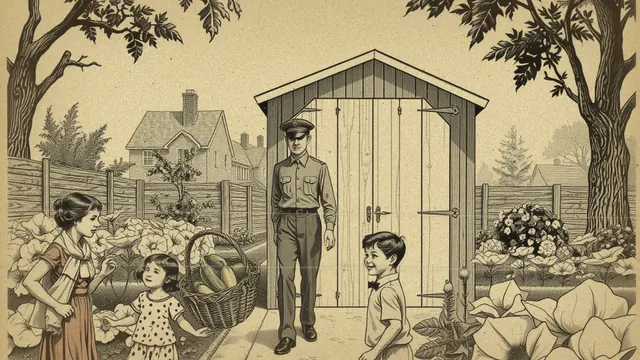
A couple in a rural house loses part of a shed roof in a windstorm. They want to keep the stored garden tools dry until the insurance adjuster visits. Working from the ground, they:
- Tie a bowline around a sturdy fence post for one corner.
- Use clove hitches plus half hitches on two other posts.
- Run the last corner to a stake with a taut-line hitch so they can tighten the tarp.
- Check the lines in the morning and slide the taut-line hitch to take up slack.
Nothing fancy, and the tools stay dry.
How to practice
- Keep a short length of cord by your couch and tie each knot a few times during an evening show.
- Practice with your eyes closed once you know a knot. Emergencies often happen in the dark.
- Teach a child. Explaining it out loud helps you remember it too.
- Tie each knot on a different object: a chair leg, a railing, a tree.
Building your rope kit
A small, well-chosen rope kit is enough for most households. Keep some cord in your evacuation bag, too. Our bug out bag list shows how cord fits alongside other essentials without adding much weight.
- A bundle of sturdy nylon utility cord
- A couple of lighter cords for small jobs
- A tarp with reinforced grommets
- A few tent stakes
- A small knife or cord cutter
Pair knots with other outdoor skills
Knots work best alongside a few related skills. Navigation without GPS helps you find your way back to camp once your tarp is up. If you spend time outdoors, foraging safely explains why you should never eat a wild plant unless an expert has identified it with certainty. And fire starting shows how to use a tarp and lines to keep tinder dry, along with the safety rules for any fire.
Want a guided preparedness plan?
Some people like the structure of a paid guide. This button opens a third-party survival or preparedness program from one of our advertising partners. Its claims are its own, not ours, so weigh them against our red flags checklist.
See the partner program →We may be paid when you click. The program shown can change. Read its terms before you buy anything. How this works
Frequently asked questions
What is the most useful knot to know?
Many people would pick the bowline, because it makes a fixed loop that holds well and is easy to untie afterward. Learning a hitch, like the clove hitch, is a close second.
What kind of rope should I keep for emergencies?
A length of sturdy utility cord or paracord-style nylon cord is handy for tarps, clotheslines and tying down gear. Check the rope's rated strength on the label and keep it dry and untangled.
Can I use these knots for climbing or rescue?
No. Climbing, rescue and anything that holds a person's weight need proper equipment and hands-on training from a qualified instructor. These knots are for everyday and camp tasks.