Choosing a Backup Generator: Types, Sizing and Transfer Switches

To choose a backup generator, start by listing what you truly need to run during an outage, add up the running watts of those items, then add the largest starting surge and some headroom. That number points you to the right size and type: a portable or inverter generator for a few essentials, or a permanently installed standby generator for most of a home. Any connection to your home's wiring needs a transfer switch installed by a licensed electrician.
Sizing a generator fits into the wider plan in our power outage section. Before you shop, ask a simpler question: do you need a generator at all? Many households get through outages with lights, a power bank, a cooler and a battery station. If you do want one, this page helps you buy the right one once.
The three main types
| Type | Best for | Trade-offs |
|---|---|---|
| Conventional portable | Running a fridge, sump pump, lights and a few outlets | Louder; power can be less steady for sensitive electronics |
| Inverter (portable) | Electronics, quieter neighborhoods, lighter needs | Often smaller output; may cost more per watt |
| Standby (permanent) | Running most or all of a home automatically | Installed by professionals; needs permits and a fuel hookup |
Portable and inverter generators run on gasoline, propane, or both (often called dual-fuel). Standby generators usually run on natural gas or a propane tank. Each fuel has different storage needs and shelf life, so read the manual and check your state and local rules on storing fuel.
How to add up watts
Every electrical item has two numbers that matter.
- Running watts: the steady power it uses once it's on.
- Starting watts: a brief extra surge that motor-driven items, such as fridges, freezers, pumps and furnace blowers, need to start up.
Here's the method, step by step.
- List what you want to run at the same time. Be honest and modest. A fridge, a few lights and phone chargers are a very different job from central air.
- Find each item's running watts. Look at the label on the appliance, the owner's manual, or the manufacturer's website. If a label lists amps and volts instead, multiplying them gives an estimate of watts.
- Add up the running watts.
- Find the largest starting surge. Motors usually don't all start at once, so you only add the single largest extra surge.
- Leave headroom. Generators are not meant to run at their maximum for long periods. Check the manual for the manufacturer's guidance.
An illustrative example
These numbers are made up to show the math. They are not real ratings for any appliance. Always use the labels on your own equipment.
Suppose a household wants to run four things:
| Item | Running watts (example only) | Extra starting watts (example only) |
|---|---|---|
| Refrigerator | 700 | 1,500 |
| Furnace blower | 800 | 1,200 |
| A few LED lights | 60 | none |
| Phone chargers | 20 | none |
| Total running | 1,580 |
The largest extra starting surge in this example is the fridge's 1,500. So the household adds 1,580 running watts plus 1,500 for the biggest surge, for a peak of about 3,080 watts. They'd then look for a generator rated comfortably above that, with headroom, rather than one that just barely clears it.
Notice what's not on the list: space heaters, electric ovens, clothes dryers and central air. Those take a lot of power, and leaving them off is often what makes a smaller, more affordable generator workable.
Transfer switches: a job for a licensed electrician
There are two safe ways to get generator power to your things.
- Extension cords. Plug appliances directly into the generator using heavy-duty, outdoor-rated cords sized for the load.
- A transfer switch. If you want the generator to power circuits in your home, such as the furnace or well pump, a licensed electrician must install a transfer switch. It keeps your home's wiring separate from the utility lines, which protects you, your neighbors and utility workers.
Never try to connect a generator to your home's wiring yourself, and never plug one into a wall outlet. Your electrician can also tell you what permits your area requires.
Questions to ask before you buy
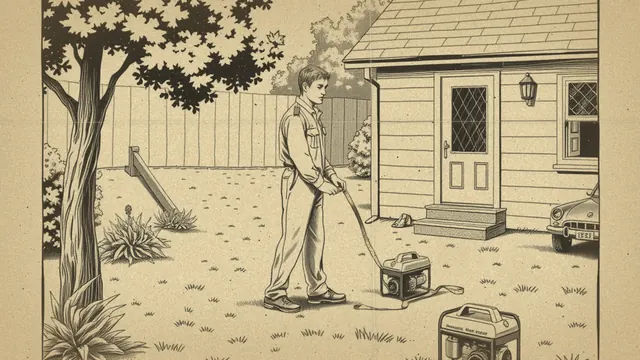
- Where will it run? You need a spot outdoors at least 20 feet from windows, doors and vents. If you can't find one, a generator may not be right for your home. Our generator safety guide explains the carbon monoxide rules that make placement so important.
- Can you move it and start it? Check weight, wheels and the starting method. Some people find pull-starts hard; electric start can help.
- How loud is it? Neighbors, local noise rules and your own sleep matter.
- Where will you store fuel? Outside living areas, in approved containers.
- Is it allowed? Renters, condo owners and homeowner association members should check their rules first.
When a generator is more than you need
If your main needs are lights and phones, you may not need a generator at all. Good emergency lighting covers the most common outage problem for very little money. For phones, a CPAP, a fan or a small fridge for a few hours, a battery-based portable power station can be a quieter, fume-free option that's safe to use indoors when you follow its instructions. Many households pair a small station inside with a generator outside.
Thinking bigger: off-grid and solar
Some readers are interested in going further, with solar panels, batteries and less reliance on the grid in general. That's a bigger project with its own codes and permits. Our guide to off-grid living basics is a calm starting point.
Watch out for marketing claims
Generator and backup power ads sometimes lean on fear or big promises, such as "never lose power again" or countdown sales. A good purchase starts with your list of needs, not an ad. Our checklist of red flags in survival products helps you spot pressure tactics.
Do one thing today
Walk through your home and write down the three to five things you'd most want running in a two-day outage. Look at each label and jot down its watts. You'll know far more about what size you need than any sales page can tell you.
Want a guided preparedness plan?
Some people like the structure of a paid guide. This button opens a third-party survival or preparedness program from one of our advertising partners. Its claims are its own, not ours, so weigh them against our red flags checklist.
See the partner program →We may be paid when you click. The program shown can change. Read its terms before you buy anything. How this works
Frequently asked questions
How do I figure out what size generator I need?
List the items you want to run at the same time, find each one's running watts on its label or manual, and add them up. Then add the largest extra starting surge from any motor-driven item, such as a fridge or pump, and leave some headroom.
What is the difference between an inverter generator and a regular portable generator?
Inverter generators produce steadier power that is gentler on electronics and are usually quieter and lighter, but often smaller. Conventional portable generators tend to deliver more watts for the money but are louder.
Do I need a transfer switch for a generator?
You need one if you want the generator to power circuits in your home directly. A licensed electrician must install it, and permits may be required. Otherwise, plug appliances into the generator with outdoor-rated extension cords.