Food Storage Containers for Long-Term Storage: What to Use and Why
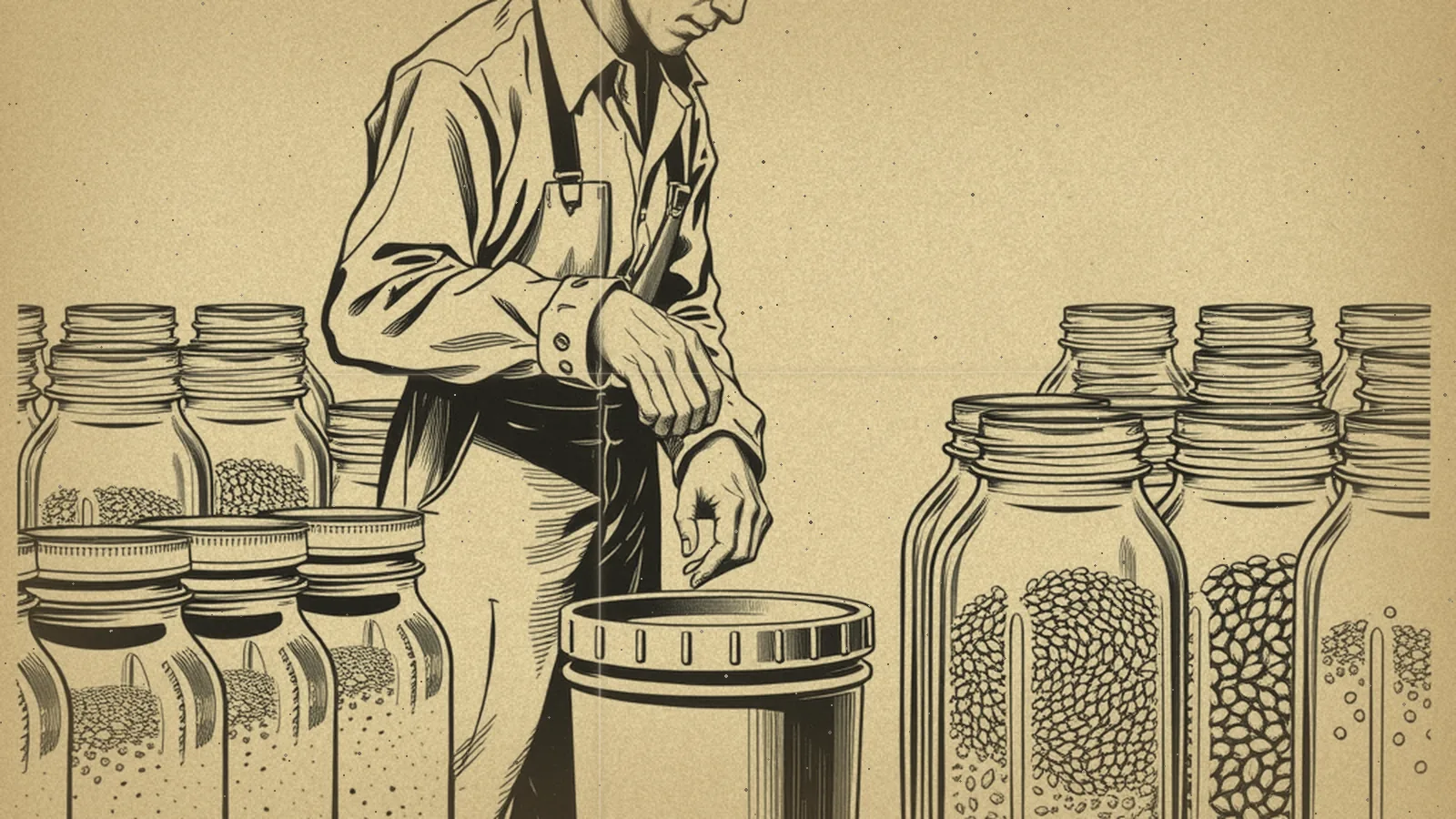
The best food storage containers for long-term storage are food-grade plastic buckets with tight lids for bulk staples, glass jars for smaller amounts, and foil-lined bags with oxygen absorbers inside buckets when you want an extra barrier. Whatever you choose, it should be made for food, seal tightly, keep out light and pests, and be easy for you to open and lift.
Containers are the step that turns groceries into a real storage system, which is why they get their own page in our Food Storage section.
What a good container does
A storage container has four jobs:
- Keep moisture out so food stays dry and mold-free.
- Keep pests out, from pantry moths to mice.
- Limit air and light, which slowly dull flavor and nutrients.
- Stay safe for food, meaning it is made from materials meant to touch food.
No single container does all four perfectly, which is why many households combine them.
Container types compared
| Container | Best for | Pros | Cons |
|---|---|---|---|
| Food-grade plastic bucket with lid | Bulk rice, beans, oats, sugar | Stackable, pest-resistant, reusable | Plastic lets some air through over time; heavy when full |
| Bucket with gamma lid | Buckets you open often | Easy screw-top access | Costs more than a plain lid |
| Foil-lined bags inside buckets | Dry, low-fat staples packed for the long term | Blocks oxygen and light; smaller portions | Takes time to seal; needs oxygen absorbers |
| Glass canning jars | Smaller amounts, spices, dried goods | Airtight, see-through, no odor | Breakable; lets in light unless stored in the dark |
| Metal cans with tight lids | Grains, flour, pet food | Strong barrier against pests | Can rust in damp areas |
| Original store packaging | Short-term pantry use | Free and convenient | Paper and thin plastic do not stop pests or moisture |
What "food-grade" means
Food-grade containers are made from materials considered safe for contact with food. In practice:
- Buy buckets and bins labeled or described as food-safe by the seller.
- Ask bakeries, delis or grocery stores whether they have used frosting or pickle buckets. If they only held food, they can be cleaned and reused.
- Never use buckets that held paint, chemicals, cleaning products or anything unknown, even after washing.
- Wash reused containers with hot, soapy water, rinse well and let them dry completely before filling.
Some people line non-food buckets with food-safe bags. It's simpler and safer to start with containers meant for food.
Buckets and gamma lids
Buckets are the workhorse of bulk storage. Medium and large sizes hold a big bag of rice or beans, stack neatly and fit on a basement shelf. Regular snap-on lids seal tightly but can be hard to pry off. A lid-opening tool makes this much easier.
For the bucket you open every week, such as the one holding flour or oats, a gamma lid is worth it. The ring snaps onto the bucket and a threaded center screws on and off by hand. Keep plain lids on buckets you rarely open.
A note on lifting: A full large bucket of rice is heavy. If you or someone in your home has back trouble, limited strength or uses a wheelchair, choose smaller buckets or jars and store them at waist height.
Glass jars
Glass canning jars are great for smaller amounts: a few weeks of rice in the kitchen, dried herbs, beans, powdered milk or dehydrated fruit. They are airtight, do not hold odors and let you see what is inside. Store them in a dark cupboard or a closed box, since light fades food over time. Pack them with towels or cardboard dividers if you live in an earthquake area.
Foil-lined bags
Foil-lined bags, often sold as mylar bags, block light and oxygen much better than plastic alone. Sealed with oxygen absorbers and placed inside a bucket, they protect dry staples from air, light and pests at once. The bucket guards against chewing and crushing; the bag guards against oxygen. Our step-by-step guide to mylar bags and oxygen absorbers explains how to fill and seal them, and which foods should never be packed this way.
Matching containers to foods
Different foods suit different containers. A quick guide:
- Rice, beans, oats, wheat: foil-lined bags inside buckets, or buckets alone for faster rotation
- Sugar and salt: airtight buckets or jars with no oxygen absorbers needed; keep them dry
- Flour and pasta: buckets or metal cans you rotate fairly often
- Spices, dried fruit, powdered milk: smaller glass jars in a dark cupboard
- Pet food: a metal can or a sealed bin with the original bag inside
If you are still deciding which staples to store, see our list of the best foods for long-term storage.
Label everything
Every container should show what is inside and the date it was packed. Masking tape and a permanent marker work fine. Good labels make rotation easy and help you judge age, which our guide to food shelf life explains in more detail.
Water containers are a separate topic
Food buckets and water containers have different needs. Water containers should be made for drinking water and stored away from chemicals and sunlight. Our guide to water storage containers covers sizes, materials and what to avoid.
Beware of overpriced "kits"
You will see container bundles sold with urgent language or claims that only one product will protect your family. A few basic buckets, lids and bags cover most needs. If marketing pushes fear or countdown deals, our guide to preparedness red flags can help you slow down and compare.
A starter setup for an apartment
A couple living in a one-bedroom apartment with a cat might begin with:
- Two medium food-grade buckets with lids for rice and beans, kept under the bed
- One gamma lid for the bucket they open most
- Six glass jars for oats, lentils, sugar and powdered milk in a dark cabinet
- A sealed bin for cat food
- Masking tape and a marker for labels
That setup fits in a small home, costs little and covers the basics of a sturdy pantry.
Do this today
Walk through your kitchen and find any staples stored in paper bags or thin plastic. Move one of them into a clean jar or bucket with a tight lid, and write the date on it.
Want a guided preparedness plan?
Some people like the structure of a paid guide. This button opens a third-party survival or preparedness program from one of our advertising partners. Its claims are its own, not ours, so weigh them against our red flags checklist.
See the partner program →We may be paid when you click. The program shown can change. Read its terms before you buy anything. How this works
Frequently asked questions
What is the best container for long-term food storage?
For bulk dry staples, a food-grade plastic bucket with a tight lid is the most common choice, often with foil-lined bags inside. Glass jars work well for smaller amounts you open often.
How can I tell if a bucket is food-grade?
Buy buckets sold specifically for food use, and check the product description or the manufacturer's information. When you can't confirm a used bucket held only food, don't use it for food.
What is a gamma lid?
A gamma lid is a two-part screw-top lid that fits onto a standard bucket. It makes opening and closing a bucket you use often much easier than pry-off lids.