Car Emergency Kit List: What to Keep in Your Car Year-Round
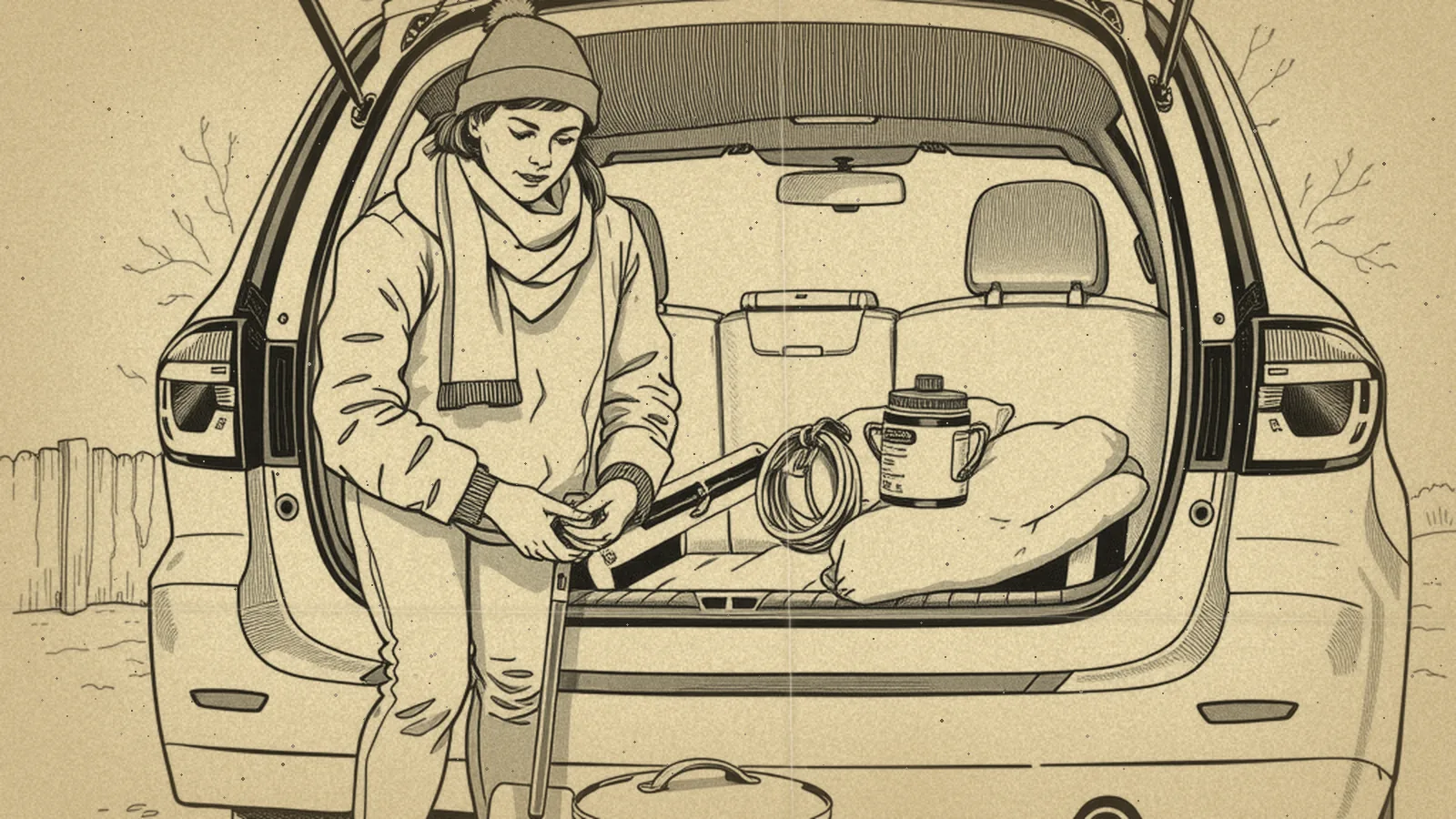
A car emergency kit is a small set of supplies you keep in your trunk for breakdowns, road closures and weather delays: water, snacks, a flashlight, a phone charger, a first aid kit, jumper cables, a warning triangle, a blanket and a few tools. Add warm gear in winter and extra water and shade in summer. It turns a long, stressful wait on the roadside into an uncomfortable but manageable one.
The car kit is one of the most useful pieces of our Emergency Kits section, because many people spend hours a week driving and the car is often where they are when plans change.
The year-round checklist
These items stay in the car all year. Most fit in a plastic bin or a sturdy tote.
| Category | Items |
|---|---|
| Water and food | Bottled water, granola bars, nuts, crackers, dried fruit |
| Light and power | Flashlight or headlamp, spare batteries, car phone charger, charged power bank |
| Visibility | Reflective warning triangle or road flares, a reflective vest |
| Car basics | Jumper cables or a portable jump starter, tire pressure gauge, spare tire checked for air |
| Tools | Multi-tool, duct tape, work gloves, a small shovel |
| Comfort | Blanket, rain poncho, spare socks, tissues, wet wipes |
| Health | A first aid kit and any daily medications |
| Navigation | Paper road map of your region |
| Sanitation | Garbage bags, hand sanitizer, toilet paper |
| Paperwork | Emergency contact card, copy of insurance and registration |
Your first aid kit for the car can be modest, but stock it with the things you're most likely to use on the road. Our first aid kit checklist breaks down what belongs in a home, car and bag kit, and how to check expiration dates.
Winter additions
Cold weather changes what you need most. When the first frost comes, add:
- A warm blanket or sleeping bag for each regular rider
- Hats, gloves and an extra warm layer
- An ice scraper and snow brush
- Sand, cat litter or traction mats for icy spots
- Hand warmers
- Extra snacks and a thermos you can fill before long trips
- A bright cloth or flag to tie to the antenna or door
Keep the gas tank fuller than usual in winter so a long delay doesn't leave you without heat. Our winter storm preparedness guide covers the home side of winter, plus pipes, heating safety and what to do before a storm arrives.
Summer additions
Heat can be as hard on drivers as cold. When the weather warms, add:
- Extra water, more than you think you need
- A sun hat and sunscreen
- A sunshade for the windshield
- A small battery-powered fan
- Electrolyte drink mix
- Light, loose clothing
Never leave children, older adults or pets in a parked car in warm weather, even briefly.
If you get stranded: stay with the car
In most situations, the car is your best shelter. It's easier for rescuers to spot than a person walking, and it protects you from wind, snow and sun.
- Get to a safe spot if you can. Pull well off the road and turn on your hazard lights.
- Call for help. Call 911 if anyone is hurt or in danger, or roadside assistance for a breakdown. Tell them your location using mile markers, exits or cross streets.
- Make yourself visible. Set out the warning triangle if it's safe to step out. In snow, tie a bright cloth to the antenna.
- Stay warm or cool. Use blankets and layers in cold, shade and water in heat.
- Be careful with the engine. If you run it for heat, keep the tailpipe clear of snow and crack a window. Carbon monoxide has no smell, and our guide to carbon monoxide poisoning explains the warning signs.
- Leave only if staying is unsafe. Rising water, fire or instructions from officials are reasons to move. Never drive or walk through flooded roads.
Examples for different drivers
- A home health aide who drives between clients keeps a small cooler bag of water and snacks and a phone mount with a charger, since her days often run long.
- A family that drives to the mountains in winter adds a sleeping bag for each person, a shovel and traction mats, and fills the tank before every trip.
- A rideshare driver in a hot city keeps two cases of water rotating in the trunk and a windshield shade.
- A grandparent who drives grandkids to school adds kid snacks, a coloring book and a spare jacket in each child's size.
- A wheelchair user with a lift-equipped van keeps a spare phone charger for the lift remote, a written note on how to operate it manually, and the number of the mobility dealer who services it.
- A college student driving home for break packs a fleece blanket, a refillable water bottle and a printed map of the route, and texts a parent at each stop.
Don't forget passengers with paws
If your dog or cat rides with you often, keep a leash, folding bowl, water and a few days of food in the car. Our pet emergency kit guide explains what animals need during an evacuation, including records and carriers.
When you have to leave the car
Sometimes you can't stay, or home is close enough to walk once conditions are safe. That's what a get-home bag is for: a small, carryable bag with walking shoes, water, a light and a map. Many commuters keep it in the trunk alongside the car kit.
Small habits that help on the road
A kit works best alongside a few easy routines. Keep at least half a tank of gas when storms are in the forecast. Check tire pressure monthly and before long trips. Tell someone your route and expected arrival time when you drive through remote areas or bad weather. Save your roadside assistance number in your phone and on the contact card in the kit. Before a road trip, look up the forecast and road conditions along the way, and be willing to wait a day. Turning back or delaying is a smart choice, not a failure.
Keep it fresh
Check your car kit twice a year, when you change the seasonal items. Replace water, rotate snacks, test the flashlight and charge the power bank and jump starter. A kit that works matters more than a big one.
No kit guarantees safety on the road. Drive to conditions, follow instructions from local officials about travel, and call 911 in an emergency.
Want a guided preparedness plan?
Some people like the structure of a paid guide. This button opens a third-party survival or preparedness program from one of our advertising partners. Its claims are its own, not ours, so weigh them against our red flags checklist.
See the partner program →We may be paid when you click. The program shown can change. Read its terms before you buy anything. How this works
Frequently asked questions
What should I keep in my car for emergencies?
Water, snacks, a flashlight, a phone charger, a first aid kit, jumper cables or a jump starter, a reflective triangle or flares, a blanket, gloves, a rain layer and a basic tool kit. Add winter or summer items as the seasons change.
Should I stay in my car if I get stranded?
Often, yes. A car gives you shelter and is easier for rescuers to find than a person on foot. Call for help, turn on your hazard lights, and leave only if staying is unsafe or officials tell you to move.
Is it safe to run the engine to stay warm while stranded?
Only with care. Keep the exhaust pipe clear of snow, because a blocked tailpipe can push carbon monoxide into the car, and crack a window for fresh air. If anyone feels dizzy, light-headed or nauseous, get to fresh air and call 911.